
Should I Keep Renting or Buy the Condo?
An Out Loud Session · Money Decisions
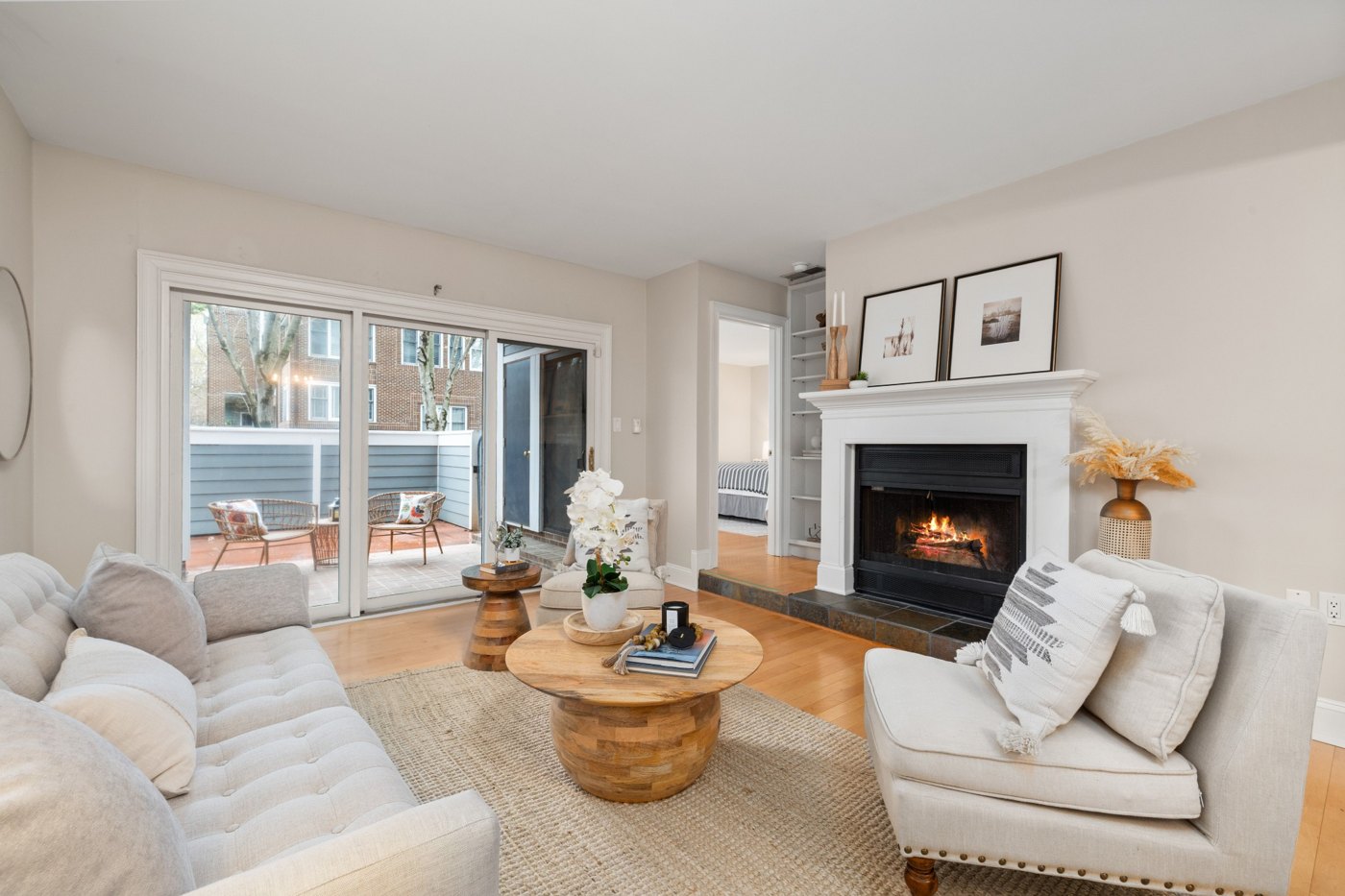
A 31-year-old renter has enough saved for a condo down payment. Buying looks within reach, but a possible move in three to five years complicates the decision. How much does owning matter—and what happens if they need to sell?
This is an actual AI conversation based on a realistic financial scenario, lightly edited for clarity. The exchange has been shortened, but the substance and turning points are unchanged.
The point isn’t to get a perfect answer. It’s to see what happens when you think the decision through.
The conversation
Homebuyer
I’m 31, renting a one-bedroom for $2,200 a month, and I found a condo I like for $360,000. I have enough for 20% down. Should I buy it?
AI
Maybe, but having the 20% down payment doesn’t tell me enough yet.
The bigger question is whether buying the condo would still leave you enough cash and monthly flexibility for the rest of your life. A down payment you can afford can still lead to a home that feels expensive to carry.
A few things would change the answer quickly: How much savings would you have left after the down payment and closing costs? What would the condo cost you each month once you include the mortgage, HOA, property tax, and insurance? And how likely are you to want to move within the next five years?
Homebuyer
I have about $115k saved. I think the estimate is about $2600 for mortgage, hoa, property tax and insurance
AI
That helps. On the surface, buying looks fairly workable: your monthly housing cost would only rise about $400, and putting 20% down would still leave you with roughly $43,000 before closing costs.
The question I’d focus on next is how long you expect to stay. Buying comes with transaction costs and less flexibility, so a condo that makes sense over 8–10 years may not make as much sense if you think you could move in 3.
AI
How likely are you to still want to live in this area five years from now?
Homebuyer
I'm not sure how long I'll live in this city. I can imagine changing jobs and moving in 3-5 years
AI
That uncertainty matters quite a bit.
If there’s a real chance you’ll move in 3–5 years, I wouldn’t treat this mainly as “$2,200 rent versus $2,600 ownership.” Buying also means putting about $72,000 into the condo and paying costs to buy now and sell later. Over a relatively short holding period, those costs can eat up a meaningful amount of whatever equity you build.
So I think your question may be shifting from “Can I afford to buy?” to “Do I value owning this condo enough to give up some flexibility for the next few years?”
What is pulling you toward buying most strongly: wanting a place of your own, building equity, or feeling like the rent is being wasted?
Homebuyer
I don't want to feel rent is wasted. I also think there might be appreciation that I'm not going to get if I don't buy
AI
That makes sense, but those are really two different arguments for buying.
The “rent is wasted” idea is weaker than it sounds because your $2,200 rent is buying you housing and flexibility. With the condo, part of the $2,600 goes to principal, but part still goes to interest, HOA, taxes, insurance, and eventually selling costs. Not all of that turns into equity.
Appreciation is the stronger argument, but over 3–5 years it is also uncertain. If the condo appreciates, great. If it stays flat, or rises only modestly, the transaction costs of buying and selling could absorb a lot of that gain.
So I’d reframe the decision this way: you are not choosing between wasting rent and building wealth. You are choosing between paying for flexibility and making a leveraged bet on one property while accepting the costs of ownership.
Homebuyer
can you explain what you mean paying for flexibility and making a leveraged bet?
AI
Sure.
By paying for flexibility, I mean your rent isn’t buying you nothing. It gives you the ability to move relatively easily if your job changes, you want a different city, or your life changes. You’re paying for housing, but also for not being tied to one property.
By making a leveraged bet, I mean you’d be putting about $72,000 down to control a $360,000 asset. If the condo goes up 10%, that’s a $36,000 increase in value on a much smaller amount of your own cash. That can work in your favor.
But leverage works both ways. If the condo falls 10%, that’s also a $36,000 decline in value. And because you may sell in only 3–5 years, buying and selling costs matter too.
So buying gives you the possibility of building equity and benefiting from appreciation. Renting gives you more flexibility and less exposure to what happens to one particular property over the next few years.
The question I’d ask myself is: Am I buying because I want to own this home, or because I’m afraid I’ll miss out if prices keep rising?
Homebuyer
I think it is a little of both. Buying would give me a sense of success. I'm also fearful of missing out. what if the price goes up and I can't afford to get into the market?
AI
That’s the part I’d slow down and separate.
Wanting the condo because ownership feels like success is a values question. Buying because you’re afraid you’ll be priced out later is a fear-of-missing-out question. They can point to the same action, but they’re not the same reason.
The FOMO argument is worth testing rather than accepting. If prices rise, buying now could help you. But if you buy mainly to avoid being left behind and then want to move in three years, you may have traded one kind of uncertainty for another.
A useful question might be: If you knew home prices would stay roughly flat for the next five years, would you still want this condo?
If the answer is yes, that tells me ownership itself has real value to you. If the answer is no, then appreciation may be doing more of the emotional work than the home itself.
Homebuyer
If I need to sell in 5 years, how much does the condo have to go up before I break even. cover closing cost and selling costs. I think paying more each month is worthwhile to own a place, but I wouldn't want to lose more money if I have to sell
AI
Roughly, yes. If we only look at buying and selling transaction costs, the condo probably needs to appreciate by about 9% to 11% over five years for you to get back to roughly even.
For a $360,000 condo, assume maybe 2–3% in closing costs when you buy and around 6–7% in selling costs when you leave. That puts the break-even sale price somewhere around $391,000 to $399,000.
So call it roughly $395,000 as an easy midpoint. That’s about a 10% increase over five years, or around 2% a year.
But there’s an important distinction: that only answers, “Did the appreciation cover my transaction costs?” It does not include the interest portion of your mortgage, HOA fees, property taxes, insurance, repairs, or the extra $400 a month you’d be spending compared with renting.
On the other hand, part of your mortgage payment would be paying down principal, so you’d also be building equity even if the condo price barely moved.
So I think your question is getting more precise: you’re willing to pay somewhat more each month for the experience of owning, but you don’t want the five-year exit to leave you significantly worse off. That’s a much better question than simply “Is rent wasted?”
Homebuyer
that's interesting. I think I need to think about this some more. thanks for breaking this down for me
AI
You’re welcome. I think you got to a useful place: not “buy or don’t buy,” but a clearer understanding of what would make buying feel acceptable to you.
The Aha
The conversation started with:
“Am I wasting money by renting?”
It ended somewhere more useful:
“How much am I willing to pay for ownership, and how much downside am I willing to accept if I need to sell in five years?”
The answer didn’t come from AI making the decision. It came from changing the question.
Try It Yourself
From Money Decisions: Out Loud with AI
I’m trying to decide whether renting or buying makes more sense for me right now. Before comparing the numbers, ask me about the life I’m trying to build over the next 5 to 10 years. Then help me compare the financial costs, flexibility, responsibilities, potential investment returns, and lifestyle tradeoffs of each option. Point out any assumptions I may be making and any important costs I may have overlooked. Don’t tell me which option is better. Help me understand which one better fits my current season of life.
Try this prompt →